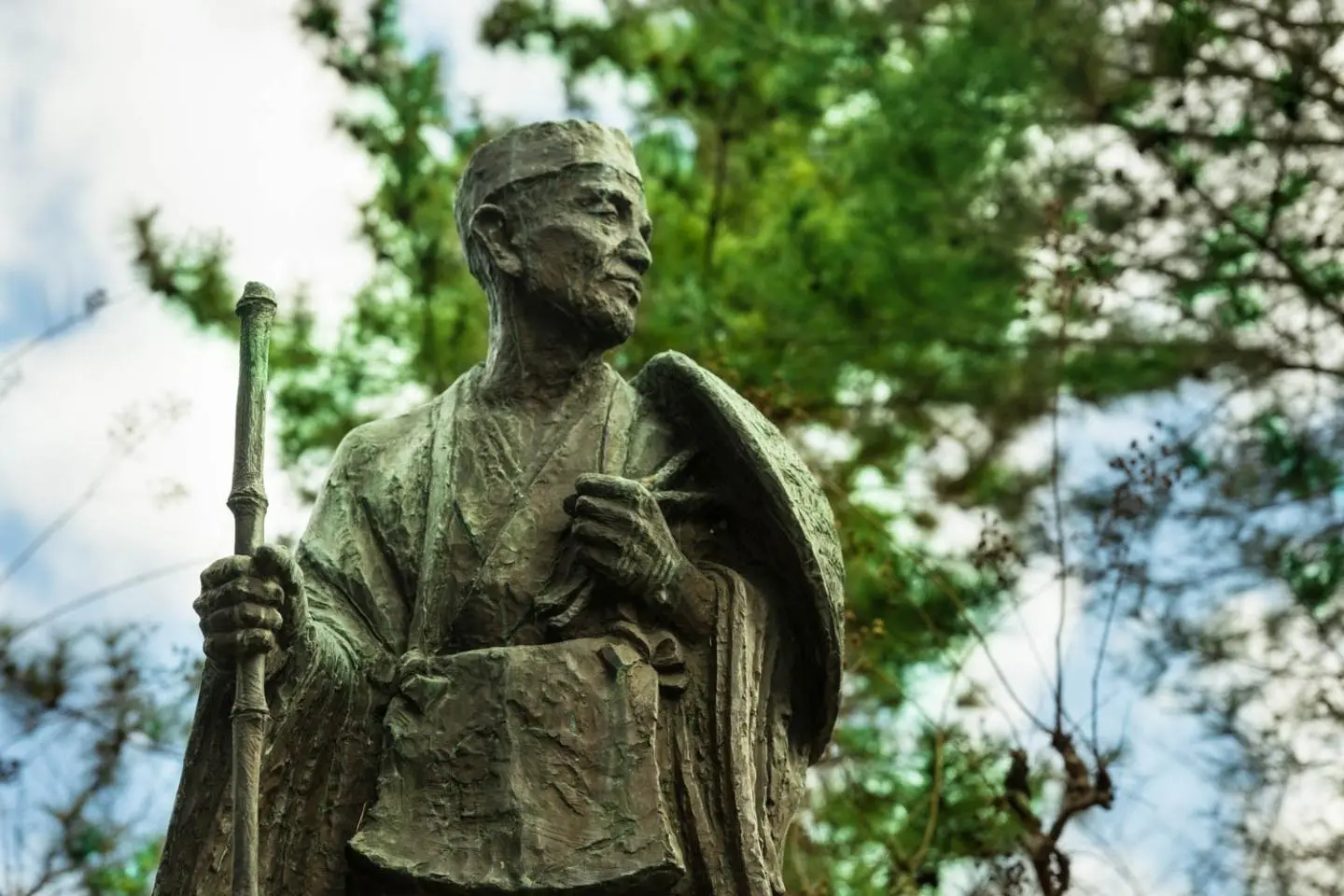

In Saitama Prefecture's Soka City, famous for Soka senbei (rice crackers), are wonderful views of Soka Matsubara. The views are mentioned in Oku no Hosomichi, a famous literary masterpiece written by Matsuo Basho on his way north towards the Tohoku region of Japan. It is often translated as ''The Narrow Road to the Deep North'' in English. When walking the area you can imagine an earlier time. In 2013 the area was nationally recognized and named.
''Soka Inn'' is located on the north side of Soka Matsubara. It is considered the staging point to The Narrow Road to the Deep North. Since the Edo period, the area has been known as ''Senbon Matsubara'' or ''Thousand Pines'' for its numerous pine trees. It is located along the Nikko Kaido, a road which stretched from ancient Edo to Nikko.
Basho begin his journey to Okushu (historical Tohoku) on 1689. He moved around by ship and on foot. From the Edo Fukugawa River, he made his way to Senju Inn (千住宿). Saying goodbye to those which accompanied him, he started his adventure north.
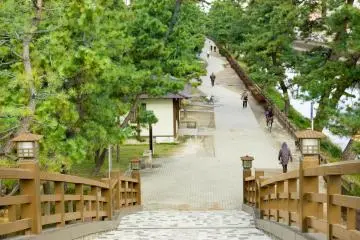
As a reflection of this important beginning is the Soka Matsubara promenade at Fudaba-gishi Park. Taking one more look back towards the safety of the Senju Inn where he stayed the night before, the bronze Basho statue bids a reluctant farewell to his disciples and friends. Basho's facial expression leaves an impression on you. As you begin to envision The Narrow Road to the Deep North, you soon find yourself at the bridge resembling the shape of two taiko drums.
First of all, let's recall that the first sentence of Matsuo Basho's masterpiece (月日は百代の過客にして..) refers to traveling through generations (百代) or perhaps back in time. This is the origin of the naming of Hyakutai Bridge. Furthermore, Basho then described starting his long walk at Yatate to the cries of birds and tears of fish during spring (行く春や鳥啼き魚の目は泪、これを矢立の初めとして…). This reference was used to name Yatate Bridge. Both bridges provide great locations to see the pine trees around the park from above.
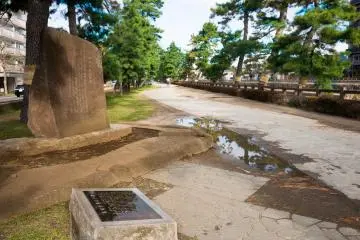
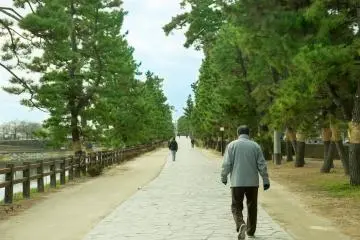
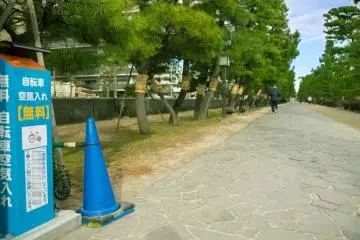
Currently, there about 600 trees, including some very old trees, planted along the Nikko Kaido. The 1.5 kilometer promenade is lined with continuous pine trees. Enjoy the scenery while walking or jogging and you'll be able to understand why this area is loved by locals.
If Basho saw today's Soka Matsubara, what would he think? Feel the past and the present for yourself with this stroll of scenic beauty.
/139.80683326722,35.836717789151,9/397x132?access_token=pk.eyJ1IjoiamFwYW50cmF2ZWxtYXBzIiwiYSI6ImNqbXBtOXYxbDB5Z3ozbHFrazJuYWMwOGYifQ.v15fy_mcFWtgopmz8PhwqA)